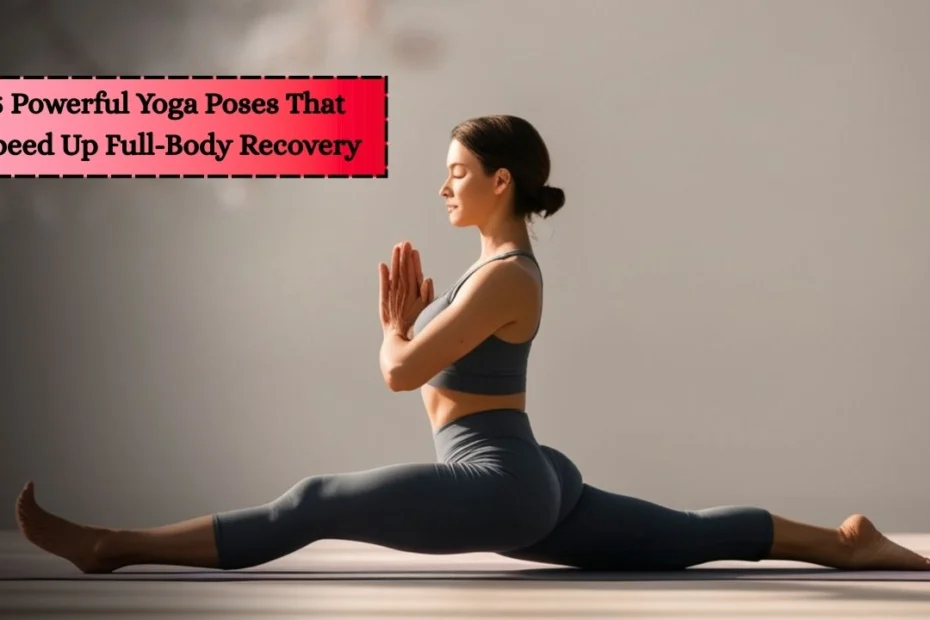
Following intense workouts, extended hours at work, or the strains of daily physical activity, your body craves effective recovery methods. Discover how to heal your muscles and replenish your energy for optimal performance.
Yoga is one of the most effective and natural ways to support full-body recovery. Unlike aggressive stretching, yoga works deeply on muscles, joints, breathing, and the nervous system at the same time.
Regular yoga practice improves blood circulation, reduces muscle stiffness, supports joint mobility, and helps the body shift into a repair mode.

Studies and fitness experts consistently highlight that gentle yoga postures help reduce muscle soreness, calm the mind, and speed up overall physical recovery. Below are five powerful yoga poses that play a major role in helping your body recover faster and feel stronger.
Why Yoga Helps In Full-Body Recovery
Yoga supports recovery by improving oxygen flow to tired muscles, reducing tightness, and activating the parasympathetic nervous system, which controls rest and healing.
When practiced correctly, yoga helps flush out waste products like lactic acid from muscles and restores flexibility. It also reduces stress hormones, which directly impact how quickly the body heals.
Yoga Poses That Speed Up Recovery
| Yoga Pose | Main Benefits | Target Areas | Recovery Support |
|---|---|---|---|
| Downward-Facing Dog | Improves circulation | Legs, arms, back | Releases muscle tension |
| Child’s Pose | Deep relaxation | Lower back, hips | Calms nervous system |
| Pigeon Pose | Hip flexibility | Hips, glutes | Reduces tightness |
| Legs Up The Wall | Restorative inversion | Legs, lower back | Reduces swelling |
| Supine Spinal Twist | Spinal mobility | Spine, core | Relieves back stress |
1. Downward-Facing Dog
Downward-Facing Dog is one of the most effective poses for full-body recovery. It stretches the hamstrings, calves, shoulders, arms, and spine at the same time.
How It Helps Recovery:
This pose improves blood flow throughout the body, helping deliver oxygen and nutrients to tired muscles. It also releases stiffness in the lower back and legs, which commonly build up after workouts or long sitting hours.
How To Practice:
Hold the pose for 30 to 60 seconds, focus on steady breathing, and gently press your heels toward the floor.
2. Child’s Pose
Child’s Pose is a deeply restorative posture that allows the body to fully relax.
How It Helps Recovery:
It gently stretches the hips, thighs, and lower back while calming the mind. This pose reduces stress and supports faster muscle repair by lowering physical and mental tension.

How To Practice:
Stay in the pose for 1 to 3 minutes, breathing slowly and deeply.
3. Pigeon Pose
Pigeon Pose is especially helpful for people who run, cycle, or sit for long hours.
How It Helps Recovery:
It deeply opens the hips and glutes, areas that store significant tension. Improved hip mobility reduces strain on the lower back and legs, allowing better movement and faster recovery.
How To Practice:
Hold each side for 30 to 60 seconds, keeping the breath slow and controlled.
4. Legs Up The Wall Pose
This gentle inversion is one of the best poses for post-workout recovery.
How It Helps Recovery:
By elevating the legs above heart level, this pose improves circulation and helps reduce swelling and heaviness in the legs. It also relaxes the nervous system and lowers fatigue.
How To Practice:
Remain in the pose for 3 to 5 minutes, allowing the body to fully relax.
5. Supine Spinal Twist
Supine Spinal Twist is excellent for releasing tension along the spine.
How It Helps Recovery:
Twisting improves spinal flexibility, massages internal organs, and relieves tight muscles around the back and hips. This helps restore natural movement after physical stress.
How To Practice:
Hold each side for 30 to 60 seconds with slow breathing.
Practicing these five powerful yoga poses regularly can significantly improve full-body recovery. They help reduce muscle soreness, improve flexibility, boost circulation, and support the body’s natural healing process.
Whether you are an athlete, office worker, or beginner, adding these poses to your routine can make your body feel lighter, stronger, and more refreshed over time.
FAQs
How often should I practice these yoga poses for recovery?
Practicing them u003cstrongu003e3 to 5 times per weeku003c/strongu003e is ideal, especially after workouts or physically demanding days.
Can beginners perform these recovery yoga poses?
Yes, all these poses are beginner-friendly and can be modified using cushions or blocks.
How long does it take to feel recovery benefits from yoga?
Many people feel reduced stiffness and relaxation immediately, while long-term recovery benefits appear within a few weeks of regular practice.
7 Life-Changing Yoga Poses For Mental Clarity

10 Yoga Secrets That Help You Sleep Like A Baby

6 Simple Yoga Poses For A Flatter Belly—No Diet Required
8 Yoga Moves For Instant Stress Relief—Try Them Today!

10 Mind-Blowing Yoga Tips You Wish You Knew Sooner