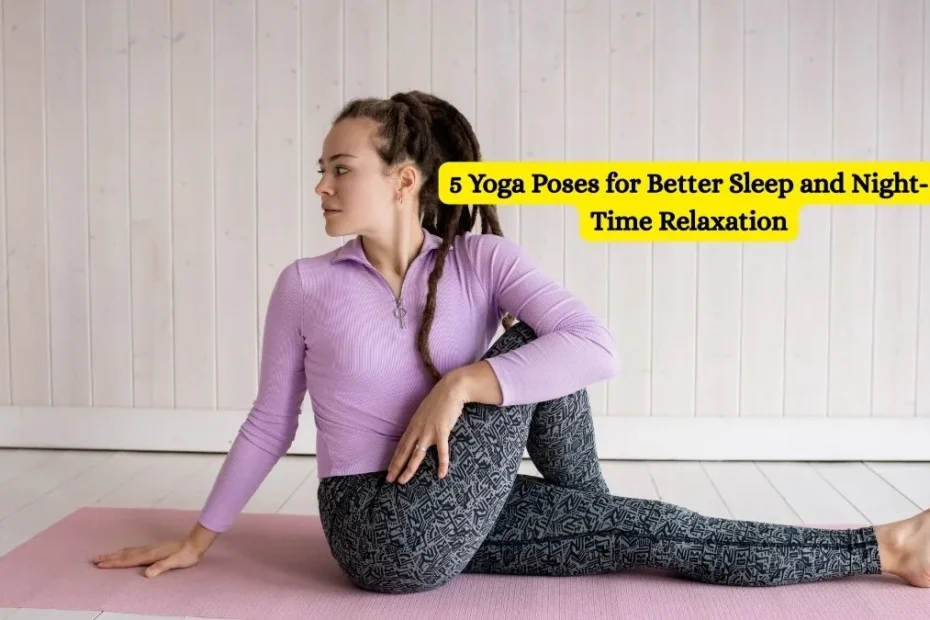
In today’s fast-paced world, poor sleep has become a common problem. Long screen time, mental stress, irregular routines, and physical tension can make it difficult to fall asleep or stay asleep through the night.
Instead of relying only on medications or supplements, many people are turning to gentle yoga as a natural way to relax the body and calm the mind before bedtime.
Night-time yoga focuses on slow movements, deep breathing, and relaxation, helping the nervous system shift from “alert mode” to “rest mode.” Practicing just a few calming poses before bed can improve sleep quality, reduce restlessness, and help you wake up feeling refreshed.
Below are 5 effective yoga poses designed specifically for better sleep and night-time relaxation.
Why Yoga Helps Improve Sleep?
Yoga helps sleep by activating the parasympathetic nervous system, which slows the heart rate, relaxes muscles, and reduces stress hormones like cortisol. Gentle stretching also releases physical tension stored in the back, hips, and shoulders—areas that often stay tight after a long day.
Regular night-time yoga can help:
- Fall asleep faster
- Reduce night-time anxiety
- Improve sleep depth and quality
- Relax tight muscles
- Create a calming bedtime routine
1. Child’s Pose (Balasana)
Child’s Pose is one of the most calming yoga postures. It gently stretches the lower back, hips, and thighs while encouraging slow, deep breathing.

How it helps sleep:
This pose signals safety and relaxation to the brain, making it easier to let go of mental tension.
Benefits:
- Relieves back and hip stiffness
- Calms the nervous system
- Reduces stress and fatigue
2. Seated Forward Bend (Paschimottanasana)
A gentle forward fold that stretches the spine and hamstrings while calming the mind.
How it helps sleep:
Forward bends naturally quiet the nervous system and reduce overthinking, which is a common cause of insomnia.
Benefits:
- Releases spinal tension
- Encourages mental relaxation
- Improves circulation
3. Supine Spinal Twist (Supta Matsyendrasana)
This lying-down twist gently massages the spine and internal organs.
How it helps sleep:
Twists release deep tension from the back and improve digestion, which can otherwise disturb sleep.
Benefits:
- Relieves lower back stiffness
- Improves spinal mobility
- Promotes deep relaxation
4. Legs Up the Wall (Viparita Karani)
A deeply restorative pose that requires minimal effort but delivers powerful relaxation benefits.
How it helps sleep:
By reversing gravity, this pose calms the nervous system and reduces swelling or heaviness in the legs.
Benefits:
- Reduces leg fatigue
- Improves blood circulation
- Calms the mind and body
5. Corpse Pose With Deep Breathing (Savasana)
Savasana is the most important pose for sleep-focused yoga.
How it helps sleep:
It allows the body to fully relax while controlled breathing slows mental activity and prepares the body for rest.
Benefits:
- Relaxes the entire body
- Reduces anxiety
- Improves sleep onset
Yoga Poses And Their Sleep Benefits
| Yoga Pose | Main Focus Area | Sleep Benefit |
|---|---|---|
| Child’s Pose | Back & hips | Stress reduction |
| Seated Forward Bend | Spine | Mental calm |
| Supine Spinal Twist | Spine & digestion | Tension release |
| Legs Up the Wall | Legs & nervous system | Deep relaxation |
| Savasana | Full body | Sleep readiness |
Tips For Practicing Yoga Before Bed
- Practice 30–60 minutes before sleep
- Keep lighting dim and calming
- Move slowly and avoid strong stretches
- Focus on deep nasal breathing
- Avoid stimulating poses or fast flows
Better sleep does not always require drastic changes. Sometimes, a simple 10–15 minute yoga routine is enough to reset the nervous system and prepare the body for rest.
These 5 yoga poses for better sleep and night-time relaxation gently release physical tension, calm the mind, and support deeper, more restorative sleep.
Practiced consistently, they can become a powerful part of your nightly self-care routine, helping you drift into sleep naturally and peacefully.
FAQs
1. How long should I hold each pose at night?
Hold each pose for 1–3 minutes, focusing on slow, steady breathing.
2. Can beginners do bedtime yoga?
Yes, all these poses are beginner-friendly and can be supported with pillows or cushions.
3. Is yoga better than stretching for sleep?
Yoga combines stretching with breathing and relaxation, making it more effective for improving sleep quality.

Yoga Techniques That Help Reduce Inflammation and Support Long-Term Health
How Yoga Enhances Mindfulness and Builds a Healthier Relationship With Stress
Yoga for Emotional Healing: Poses That Help Release Stored Stress and Trauma

Chair Yoga Exercises That Improve Mobility and Reduce Joint Stiffness
Evening Yoga Routine Designed to Relax Muscles and Prepare You for Sleep
