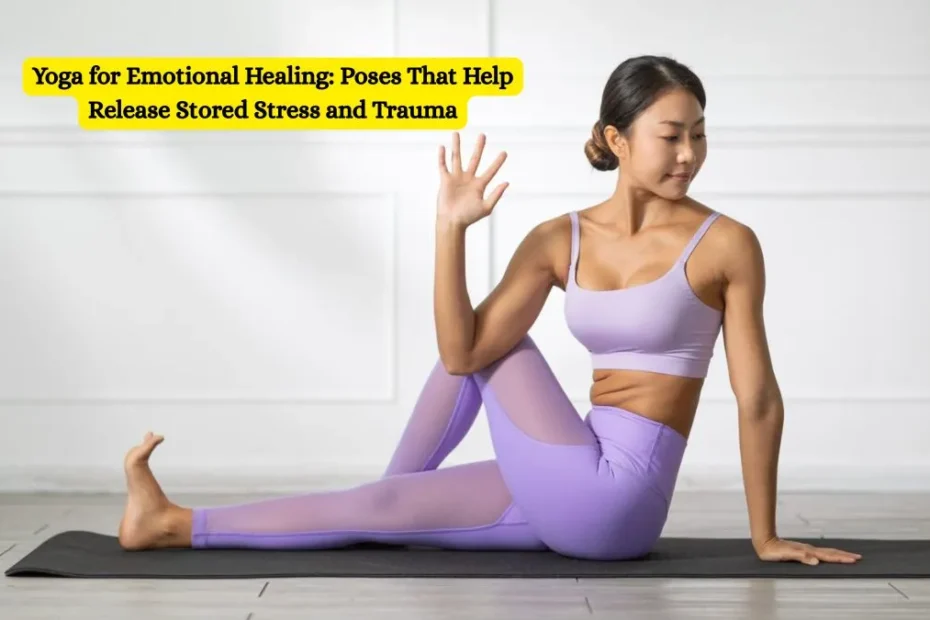
Emotional stress does not live only in the mind. It often settles quietly into the body—tight hips, shallow breathing, tense shoulders, or chronic fatigue. Over time, unresolved emotions and stressful experiences can become stored tension, affecting both physical comfort and emotional well-being.
Yoga offers a gentle, supportive way to release this stored stress. Rather than forcing change, yoga creates a safe space for the body to soften, the nervous system to calm, and emotions to surface naturally.
While yoga is not a replacement for professional therapy, it can be a powerful complementary practice for emotional healing and long-term balance.

How Emotions Are Stored in the Body?
Stress and emotional experiences activate the body’s survival response. When this response is not fully resolved, muscles may remain tight and breathing patterns restricted. Areas like the hips, chest, jaw, neck, and lower back are common places where emotional tension accumulates.
Over time, this stored stress can show up as stiffness, discomfort, restlessness, or emotional numbness. Yoga helps by gently reconnecting the mind with the body, allowing awareness and release to happen gradually and safely.
Why Yoga Supports Emotional Healing?
Yoga works on both the physical body and the nervous system. Slow movements and deep breathing signal safety to the brain, encouraging the body to shift out of constant alert mode.
When the nervous system relaxes, the body becomes more receptive to releasing tension. Emotional healing often begins not by analyzing feelings, but by creating conditions where the body feels supported enough to let go.

Yoga also emphasizes mindfulness, helping practitioners observe sensations and emotions without judgment or pressure.
Creating a Safe Yoga Practice for Emotional Release
When using yoga for emotional healing, gentleness is essential. The goal is not intensity or performance, but comfort and awareness.
Move slowly, pause often, and choose poses that feel grounding and supportive. Props such as blankets, cushions, or blocks can help the body relax fully. Most importantly, allow emotions to arise naturally without trying to control or suppress them.
Yoga Poses That Help Release Stored Stress and Trauma
These poses are commonly used in gentle and trauma-aware yoga practices. They encourage relaxation, grounding, and emotional release.
1. Child’s Pose (Balasana)
Child’s Pose creates a sense of safety and containment. It gently stretches the back and hips while calming the nervous system. Many people experience a feeling of emotional comfort and grounding in this posture.
2. Cat–Cow Pose (Marjaryasana–Bitilasana)
This slow spinal movement encourages breath awareness and releases tension along the spine. Cat–Cow helps reconnect movement with breathing, supporting emotional regulation and nervous system balance.
3. Seated Forward Fold (Paschimottanasana)
Forward folds encourage introspection and calming. This pose gently stretches the back and hamstrings while soothing the mind. It can help quiet mental noise and release emotional heaviness.
4. Reclined Bound Angle Pose (Supta Baddha Konasana)
This deeply restorative pose opens the hips and chest while fully supporting the body. The hip area is often associated with stored stress, and this pose allows gentle release without strain.
5. Supine Spinal Twist
Gentle twists help release tension along the spine and support digestion. Twists are grounding and can help process emotional stress while encouraging relaxation.
6. Legs-Up-the-Wall Pose (Viparita Karani)
This pose reduces fatigue, supports circulation, and calms the nervous system. It is especially helpful for emotional exhaustion, anxiety, and overwhelm.
7. Supported Bridge Pose
A gentle, supported backbend opens the chest and heart area. This can help release emotional tightness linked to sadness or stress while maintaining a feeling of safety.
8. Corpse Pose (Savasana)
Savasana is where deep emotional integration often occurs. With full support and stillness, the body can process and release stored tension naturally.
The Role of Breath in Emotional Healing
Breathing plays a central role in releasing emotional stress. Slow, deep breathing activates the parasympathetic nervous system, reducing stress hormones and encouraging relaxation.
Simply observing the breath—without trying to change it—can create emotional awareness and calm. Over time, breath awareness becomes a tool for emotional regulation both on and off the mat.
Allowing Emotions to Surface Gently
It is not uncommon for emotions to arise during or after yoga practice. This can include sadness, relief, warmth, or even tears. These responses are natural signs of release.
The key is to allow emotions without judgment. There is no need to analyze or label them during practice. Simply noticing and breathing through sensations supports healing.
If emotions feel overwhelming, grounding poses or resting positions can help restore a sense of stability.
Making Yoga Part of Emotional Self-Care
Consistency matters more than duration. Short, regular sessions focused on gentleness and awareness can support emotional healing more effectively than occasional intense practices.
Yoga for emotional healing is not about fixing yourself—it is about listening, supporting, and reconnecting with your body over time.
Yoga offers a compassionate path toward emotional healing by addressing stress where it often hides—in the body. Through gentle poses, mindful breathing, and nervous system regulation, yoga helps release stored tension and create space for emotional balance.
While healing takes time, yoga provides steady support along the way. Practiced with patience and care, it can become a powerful tool for restoring connection, resilience, and inner calm—one breath and one movement at a time.
FAQs
1. Can yoga really help release emotional stress stored in the body?
Yes. Gentle yoga and mindful breathing help calm the nervous system, allowing the body to release stored tension gradually.
2. Is yoga a replacement for therapy when dealing with trauma?
No. Yoga can support emotional healing but should complement, not replace, professional mental health care when needed.
3. What should I do if emotions come up during yoga practice?
Pause, breathe, and rest in a comfortable position. Allow emotions without judgment and return to grounding poses if needed.

Yoga Techniques That Help Reduce Inflammation and Support Long-Term Health

How Yoga Enhances Mindfulness and Builds a Healthier Relationship With Stress

Chair Yoga Exercises That Improve Mobility and Reduce Joint Stiffness
Evening Yoga Routine Designed to Relax Muscles and Prepare You for Sleep

How Consistent Yoga Practice Improves Digestion, Breathing, and Circulation
