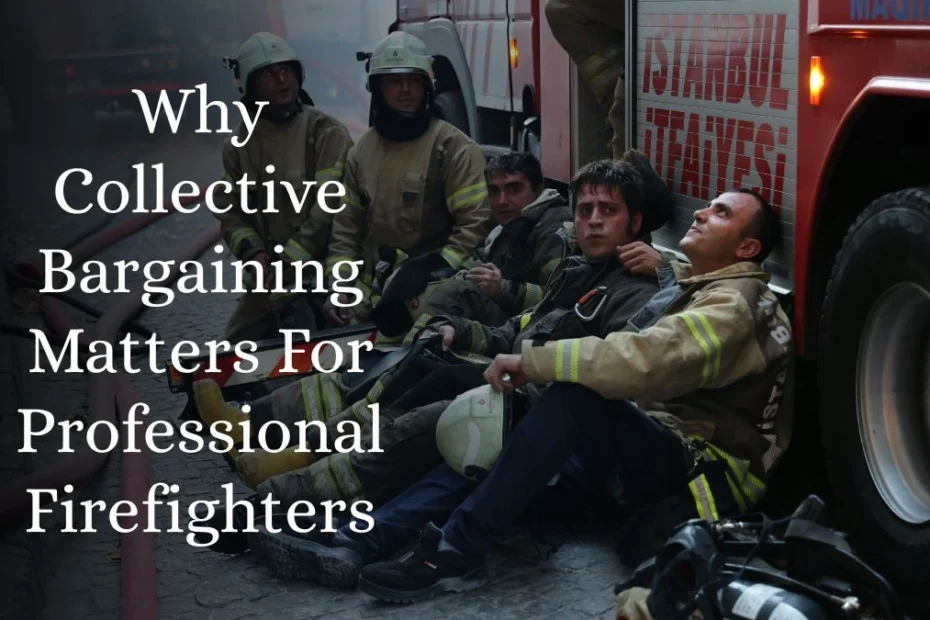
Professional firefighters risk their lives every day to protect communities from fires, disasters, medical emergencies, and hazardous situations.
Despite this responsibility, firefighters often face unsafe staffing levels, outdated equipment, long shifts, and budget pressures that threaten both their safety and public protection.
This is where collective bargaining becomes essential.
Collective bargaining gives firefighters a formal, legal voice in decisions that affect their jobs, their health, and the communities they serve.
It allows firefighters to negotiate fair wages, safer working conditions, reliable benefits, and staffing standards—rather than leaving those decisions solely to political or administrative discretion.
In this pillar guide, we explore why collective bargaining matters for professional firefighters, how it works, what it protects, and why it remains one of the most powerful tools for firefighter safety, stability, and service quality.
What Is Collective Bargaining?
Collective bargaining is a legally recognized process where employees—represented by a union or association—negotiate with employers over workplace conditions.
For firefighters, collective bargaining typically covers:
- Wages and overtime pay
- Work schedules and shift lengths
- Staffing minimums
- Health, disability, and retirement benefits
- Safety equipment and training standards
- Disciplinary procedures and due process
Rather than negotiating individually, firefighters bargain as a collective unit, which creates balance and fairness in employer-employee relationships.
Why Firefighters Need Collective Bargaining More Than Most Professions
1. Firefighting Is Inherently Dangerous
Firefighters face:
- Extreme heat and toxic smoke
- Structural collapses
- Hazardous materials exposure
- Long-term cancer and cardiovascular risks
Collective bargaining ensures that safety standards are enforceable, not optional.
2. Firefighters Cannot Simply Walk Away
Unlike many professions, firefighters cannot strike freely or abandon emergency services. This makes formal negotiation rights critical, ensuring their concerns are addressed without compromising public safety.
Key Areas Where Collective Bargaining Protects Firefighters
Fair Pay and Overtime Protections
Firefighters work irregular schedules, mandatory overtime, and extended emergency deployments. Collective bargaining helps secure:
- Competitive base salaries
- Time-and-a-half or double-time overtime
- Fair compensation for specialty skills
Without collective agreements, pay decisions can become inconsistent or politically driven.
Staffing Levels and Response Times
Understaffed fire departments increase injury risk and slow emergency response.
Through collective bargaining, firefighters can negotiate:
- Minimum staffing per apparatus
- Safe company deployment standards
- Protections against chronic understaffing
These agreements directly improve public safety outcomes.
Health, Cancer, and Disability Benefits
Firefighters experience higher rates of job-related cancer and long-term illness. Collective bargaining helps secure:
- Presumptive cancer coverage
- Comprehensive health insurance
- Disability and line-of-duty death benefits
These protections ensure firefighters and their families are not financially devastated by service-related illness.
Retirement and Pension Security
Firefighters often retire earlier due to physical demands. Collective bargaining protects:
- Defined benefit pensions
- Cost-of-living adjustments
- Survivor benefits
Stable retirement systems help departments retain experienced personnel and maintain operational continuity.
Training and Professional Standards
Through bargaining agreements, firefighters can secure:
- Paid training time
- Modern equipment standards
- Certification and advancement pathways
This strengthens both career development and department readiness.
How Collective Bargaining Improves Public Safety
Collective bargaining does not only benefit firefighters—it benefits communities.
When firefighters negotiate for:
- Safer staffing
- Modern equipment
- Adequate rest periods
Communities receive faster response times, better emergency outcomes, and more resilient fire departments.
Research consistently shows that well-staffed, well-trained departments reduce fire fatalities and property loss.
Collective Bargaining vs. At-Will Employment
| Aspect | Collective Bargaining | No Collective Bargaining |
|---|---|---|
| Pay Structure | Negotiated and transparent | Employer-controlled |
| Staffing Standards | Contractually protected | Subject to budget cuts |
| Safety Policies | Enforceable agreements | Management discretion |
| Discipline | Due process protections | At-will termination |
| Benefits | Guaranteed by contract | Can be reduced or eliminated |
This comparison highlights why collective bargaining provides stability and fairness in high-risk professions like firefighting.
Legal Foundation for Firefighter Collective Bargaining
In the United States, collective bargaining rights vary by state, but federal labor law recognizes the importance of worker representation.
The U.S. Department of Labor outlines public-sector labor protections and employment standards relevant to emergency services.
This federal framework supports fair labor practices while allowing states to tailor bargaining laws to public safety needs.
Common Myths About Firefighter Collective Bargaining
Myth 1: Collective Bargaining Is Only About Pay
Reality: Safety, staffing, training, and health protections are often higher priorities.
Myth 2: It Hurts Taxpayers
Reality: Well-negotiated agreements reduce turnover, injuries, lawsuits, and emergency failures—saving public money long-term.
Myth 3: Firefighters Already Have It Easy
Reality: Firefighters face physical, mental, and emotional stress that few professions experience consistently.
Why Collective Bargaining Strengthens Firefighter Morale
When firefighters feel heard and respected:
- Job satisfaction improves
- Retention rates increase
- Recruitment becomes easier
Departments with strong collective agreements often experience lower burnout and higher performance.
The Role of Firefighter Unions in Collective Bargaining
Firefighter unions serve as:
- Legal representatives
- Safety advocates
- Policy negotiators
They ensure contracts reflect real-world operational needs, not just budget priorities.
Future Challenges and the Growing Importance of Collective Bargaining
Modern fire departments face new pressures:
- Climate-driven disasters
- Urban density and high-rise risks
- EMS overload
- Staffing shortages
Collective bargaining will play a critical role in adapting departments to these evolving demands while protecting firefighter well-being.
Collective Bargaining Is a Public Safety Tool
Collective bargaining matters for professional firefighters because it protects lives, livelihoods, and communities. It ensures that firefighters have a voice in safety decisions, fair compensation, and working conditions that directly impact emergency response quality.
Strong collective bargaining agreements create safer firefighters, stronger departments, and better-protected communities. In an era of rising risk and responsibility, collective bargaining is not a privilege—it is a necessity.
FAQs
Why is collective bargaining important for firefighters specifically?
Firefighters face high risks and unique work demands. Collective bargaining ensures safety standards, staffing protections, and fair compensation are legally enforceable.
Does collective bargaining improve public safety?
Yes. Better staffing, training, and equipment directly lead to faster response times and fewer firefighter and civilian injuries.
Do all firefighters have collective bargaining rights?
No. Rights vary by state and municipality, making advocacy and policy engagement crucial for expanding protections.
How Firefighter Unions Support Members And Their Families
Fire Service Policy Changes Every Firefighter Should Be Aware Of
Firefighter Injury Compensation: What You Should Know
How Iowa Legislation Is Improving Firefighter Working Conditions
How Fire Departments Are Building Stronger Community Relationships