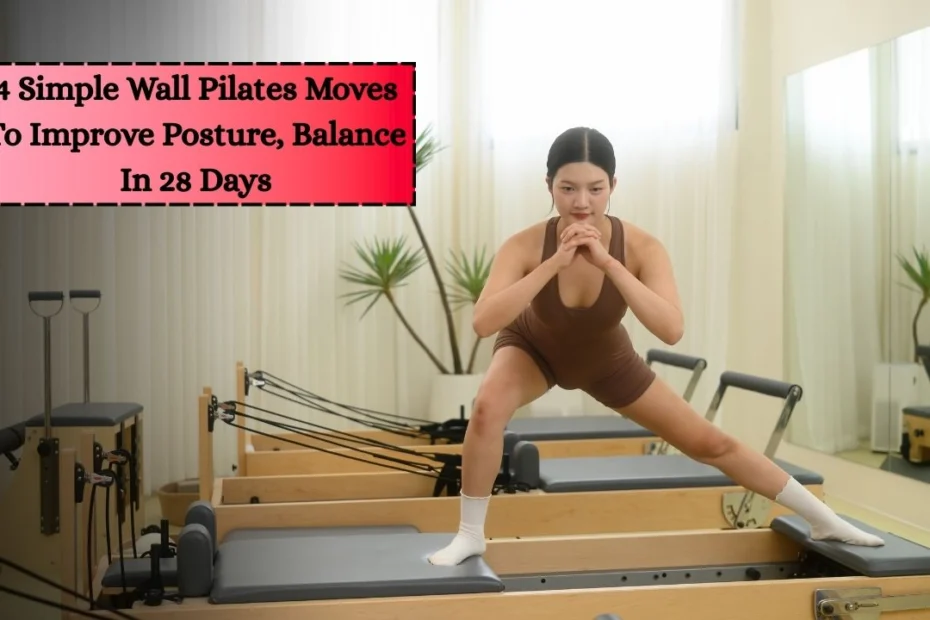
In today’s fast-paced world, many people are unknowingly grappling with issues like poor posture and balance. The consequences of prolonged sitting, constant screen exposure, and a lack of physical activity can weaken core muscles, tighten hips, and strain the spine. Initially minor discomforts can escalate into chronic back pain, neck stiffness, and misalignment. What effective strategies can we adopt to address these modern-day challenges?
Wall Pilates is a simple, low-impact exercise method that uses a wall for support, alignment, and feedback. It helps the body learn correct posture while improving balance, stability, and muscle control.
The best part is that you only need a wall and a few minutes a day. By practicing the right movements consistently, noticeable improvements can be achieved in 28 days.
Why Wall Pilates Works For Posture And Balance
The wall acts as a guide that keeps your body in proper alignment. When your spine, shoulders, hips, and head are supported, the muscles learn to engage correctly. Wall Pilates strengthens the deep core muscles that support the spine, improves body awareness, and reduces unnecessary strain.
Balance improves because these exercises activate smaller stabilizing muscles in the ankles, knees, hips, and core. Since movements are slow and controlled, they are safe for beginners and effective for long-term posture correction.
4 Simple Wall Pilates Moves To Practice Daily
Perform these exercises 5–6 days a week. The full routine takes about 10 minutes per day.
| Exercise Name | How To Do It | Time / Reps | Main Benefit |
|---|---|---|---|
| Wall Alignment Stand | Stand with back against the wall, spine tall, core engaged | 1–2 minutes | Improves posture awareness |
| Wall Roll-Down | Slowly roll spine down and back up with control | 6–8 reps | Strengthens core and spine |
| Single-Leg Wall Balance | Balance on one leg while standing tall near the wall | 30–45 sec each leg | Enhances balance and stability |
| Wall Squat Hold | Slide down into a squat while keeping back against wall | 30–60 seconds | Builds leg and core strength |
Exercise Breakdown And Benefits
Wall Alignment Stand
This is the foundation of good posture. Standing with your back against the wall teaches your body correct alignment. Your heels, hips, shoulders, and head should be in one line. This exercise retrains the muscles that keep you upright throughout the day.
Wall Roll-Down
This movement improves spinal flexibility and strengthens the deep abdominal muscles. Rolling down one vertebra at a time increases control and reduces stiffness, which directly supports better posture and balance.
Single-Leg Wall Balance
Balancing on one leg challenges your body’s stability. It strengthens the ankles, hips, and core, which are essential for walking, standing, and preventing falls. Keeping the wall nearby provides safety and confidence.
Wall Squat Hold
This move strengthens the glutes, thighs, and core, which are crucial for maintaining upright posture. Strong legs help support the spine and improve overall balance during daily movements.
Common Mistakes To Avoid
- Rushing through movements instead of staying slow and controlled
- Holding your breath instead of breathing naturally
- Leaning too hard on the wall instead of engaging muscles
- Ignoring pain signals and pushing beyond comfort
Who Should Try Wall Pilates
- Beginners starting a fitness routine
- Office workers with posture issues
- Adults seeking low-impact exercise
- People wanting better balance without heavy workouts
Improving posture and balance does not require expensive equipment or long workouts. With 4 simple Wall Pilates moves, you can train your body to stand taller, move better, and feel stronger in just 28 days. Consistency is the key.
By spending a few minutes daily focusing on alignment, control, and breathing, you build a stronger foundation for long-term posture health and stability.
FAQs
How often should I do Wall Pilates for best results?
Practicing u003cstrongu003e5–6 days a weeku003c/strongu003e gives the best improvement in posture and balance within 28 days.
Is Wall Pilates suitable for beginners?
Yes, u003cstrongu003eWall Pilates is beginner-friendlyu003c/strongu003e, low-impact, and easy to modify for different fitness levels.
Can Wall Pilates help reduce back pain?
Yes, improving u003cstrongu003ecore strength and postureu003c/strongu003e can reduce stress on the spine and help ease mild back discomfort over time.
Yoga for Chronic Headaches: Simple Asanas That Really Work
Yoga for High Blood Pressure: Safe and Effective Asanas
Yoga Therapy for Blood Pressure Patients Explained Simply
The 15 Best Yoga Poses to Build Better Balance
8 Advanced Yoga Poses to Work Towards