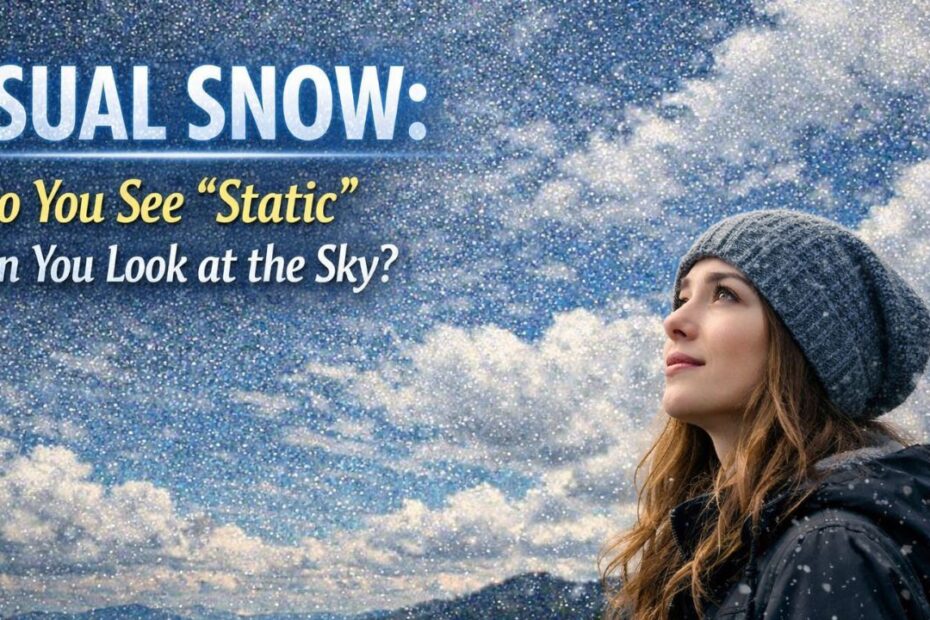
Have you ever looked up at a pristine blue sky and noticed an unexpected flicker in your vision? While it might feel like a mere optical illusion or a minor annoyance, there’s a fascinating term for this occurrence that could pique your interest.
Is it normal to see ‘visual snow’? Or could it mean something more?
What’s Up With That ‘Snow’ You’re Seeing?
Let’s be real: most of us have glanced at a blank wall or looked up at the sky and spotted tiny flickering dots or grainy patterns. You know, that weird static effect?

This isn’t just you. There’s even a medical term for it—it’s called Visual Snow Syndrome.
- Looks like static or “visual noise” (think TV snow)
- Usually most noticeable on plain, bright backgrounds
- For some, it’s there all the time; for others, it comes and goes
Is Visual Snow Common?
Here’s something surprising: a lot of people report seeing visual snow at some point in their lives. In fact, studies suggest it might be more common than you think!
According to neurologists and vision specialists, visual snow is:
- Not always a sign of eye damage or disease
- Often noticed when you’re tired, stressed, or looking at bright lights
- Sometimes linked with migraines—especially migraine with aura
Basically, if you’ve seen it, you’re definitely not alone.

What Does Science Say?
Visual snow is still a bit of a mystery for doctors and researchers. You’d think by now we’d have all the answers, right?
The current expert consensus:
- Visual snow is a neurological phenomenon, not an eye problem
- It’s thought to involve the brain’s visual processing centers
- It’s not dangerous in most cases, but can be annoying
Some people see static 24/7, while others only notice it in certain lighting or situations. No two cases are exactly the same.
Other Symptoms to Watch For
Do you just see static, or do you get any of these?

- Flashes of light (photopsia)
- Afterimages (seeing shapes or outlines after looking away)
- Light sensitivity
- Tiny drifting shapes (floaters)
If you answered yes to some of these, you might have what’s known as “Visual Snow Syndrome.” But don’t panic—most people learn to live with it just fine.
Should You Be Worried?
Here’s the reassuring part: for the majority of people, visual snow isn’t harmful. It’s not a sign you’re going blind, or that something terrible is happening.
But, it’s smart to pay attention to any changes in your vision. Experts suggest you see a doctor if:
- The static suddenly appears or gets worse
- You notice vision loss or blind spots
- You’re getting frequent headaches or other neurological symptoms
It’s always better to get checked out, just for peace of mind.
Living With Visual Snow
So, what can you do if visual snow is bugging you?
- Take breaks from screens and bright lights
- Try stress reduction (yes, meditation actually helps)
- Wear sunglasses outdoors
- Talk to a neurologist if it’s really impacting your life
There’s no guaranteed cure yet, but some people find relief with lifestyle tweaks.
What’s Next for Visual Snow Research?
The good news? Researchers are paying more attention. There’s a growing movement to understand visual snow better, with new studies popping up every year.
Doctors agree: if you see static, you’re not imagining things. You’re part of a community that’s finally getting answers.
The Takeaway
So, next time you spot that “static” effect, remember—you’re not alone, and it’s usually nothing to worry about. But if anything changes, reach out to a professional. Your eyes (and brain) will thank you!
Have you seen visual snow before? Let me know—you’re definitely in good company.

VPNs: Do You Really Need One or Is It Just Marketing Hype?

Incognito Mode: Does It Actually Hide Your Browsing from Your ISP?

Subscription Fatigue: How to Find and Cancel Subs You Forgot About

5G Conspiracy: Why The Towers Are Harmless (Physics Explained)
Wireless Charging: Is It Less Efficient Than Plugging In?