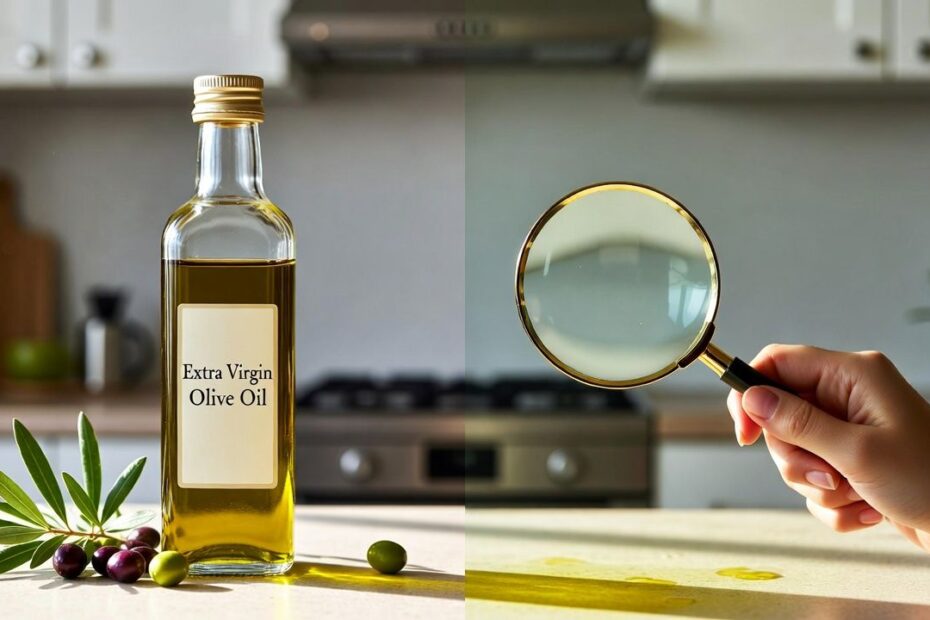
Have you ever questioned the true quality of the olive oil in your kitchen? You might be surprised to learn that many bottles marked ‘extra virgin’ don’t always live up to their label. How confident are you that the olive oil you use is as pure as it claims to be?
If you’ve ever wondered about olive oil fraud, you’re not alone. As someone who cares about what I eat, I had to dig into the facts. Let’s uncover how you can spot fake extra virgin olive oil and make sure you’re getting exactly what you pay for.
Why Does Olive Oil Fraud Happen?
First, let’s talk about the olive oil business. Experts agree that olive oil is one of the most adulterated products in the world. Why?

- It’s expensive to produce genuine extra virgin olive oil.
- There’s high demand for healthy oils.
- Regulations can be inconsistent between countries.
Sometimes, less scrupulous suppliers cut costs by blending olive oil with cheaper oils or using lower quality olives. You might think you’re getting pure Greek or Italian olive oil, but it could be diluted or even fake.
What Does ‘Extra Virgin’ Really Mean?
You see ‘extra virgin’ on the label, but what does that even guarantee?
- Extra virgin olive oil (EVOO) must be made from fresh olives, cold-pressed, and free from defects.
- It should have low acidity (below 0.8%).
- It should pass both chemical and taste tests.
The problem? Not all oil labeled ‘extra virgin’ meets these standards—especially if it’s been tampered with.
Tell-Tale Signs Your Olive Oil Might Be Fake
So how can you tell if your olive oil is authentic?
- Price: If it’s suspiciously cheap, it’s probably too good to be true.
- Packaging: Genuine EVOO is usually in dark glass bottles or tins (not clear plastic), protecting it from light damage.
- Origin: Look for a single-country origin, not vague terms like ‘Mediterranean blend’.
- Harvest Date: Real EVOO often lists a harvest or bottling date. Fresher is better!
- Certification: Seals from organizations like the IOC (International Olive Council), PDO, or PGI indicate better oversight.
Still unsure? Let’s get hands-on.
Simple At-Home Tests (And Their Limits)
There are a few DIY tricks you can try, but remember—none are foolproof:
- The Fridge Test: Put some oil in the fridge. Authentic EVOO may go cloudy or solidify, but not always. Some real olive oils remain liquid at low temps.
- Smell and Taste: Real extra virgin olive oil smells grassy, fruity, or peppery. If it’s musty, rancid, or tasteless, it’s likely fake or low quality.
- Color: Don’t judge by color alone! High-quality olive oil ranges from green to golden—color is not a guarantee.
Trust your senses, but also trust the science. If you’re truly concerned, lab testing is the only way to be certain, but that’s not practical for most of us.
How to Buy Real Extra Virgin Olive Oil
Ready to shop smarter? Here’s what I do, and what the experts recommend:

- Buy from reputable brands or local producers you trust.
- Look for fresh harvest and bottling dates—aim for oil less than two years old.
- Check for third-party certifications or quality seals.
- When possible, taste before you buy (many specialty shops offer samples).
- Store at home in a cool, dark place, and use within a few months of opening for best flavor.
Research shows that oils from California, Australia, and certain regions in Europe are often more strictly regulated. That’s good news if you want to avoid fakes.
Final Thoughts: Trust Your Taste—and Knowledge
No one wants to pay for premium olive oil and get ripped off. By staying informed and a little skeptical, you can outsmart the fakes.
Next time you reach for a bottle, remember these tips. If it tastes amazing, smells fresh, and checks all your boxes, you’re probably enjoying the real thing. And that’s worth every drop!

VPNs: Do You Really Need One or Is It Just Marketing Hype?

Incognito Mode: Does It Actually Hide Your Browsing from Your ISP?

Subscription Fatigue: How to Find and Cancel Subs You Forgot About

5G Conspiracy: Why The Towers Are Harmless (Physics Explained)
Wireless Charging: Is It Less Efficient Than Plugging In?