Have you ever wondered about the true origins of the spicy green paste that accompanies your sushi? You might be intrigued to discover that most of what we know as “wasabi” isn’t the real deal at all.
The Great Wasabi Switch
If you love sushi, you probably reach for that fiery green blob without a second thought. But did you know there’s a high chance you’ve never had authentic wasabi? Most people haven’t!
So, what’s really going on?

- Over 90% of “wasabi” served outside Japan is actually made from horseradish, mustard, and green food coloring.
- Even in Japan, real wasabi is rare and expensive.
What Is Real Wasabi?
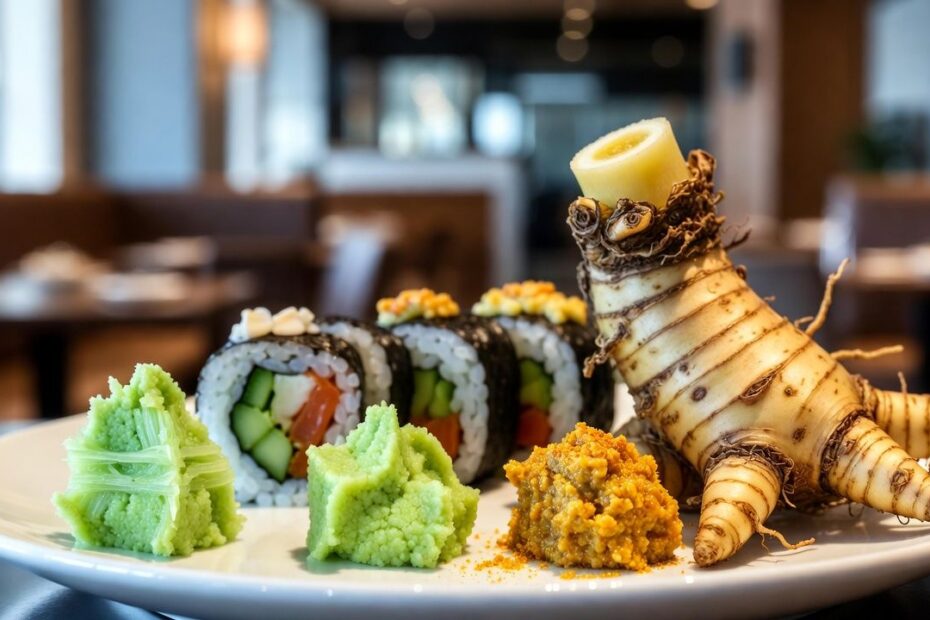
Real wasabi comes from the Wasabia japonica plant. It’s notoriously picky: it needs pure, running spring water and just the right climate. This makes it difficult and costly to grow.
- Grown mainly in Japan, especially in regions like Shizuoka and Nagano.
- Fresh wasabi is grated moments before serving for full flavor.
- Its heat is subtle, floral, and fades fast—totally different from the fiery punch you’re used to!
Why Fake Wasabi Took Over
Here’s the big question: Why did horseradish take center stage? The answer is simple—cost and convenience.
- Wasabia japonica is expensive, sometimes over $100 per pound.
- Horseradish is cheap, easy to grow, and stores well.
- Adding green dye and mustard gives a similar look and kick.
Most sushi restaurants outside Japan use this blend. If they say “wasabi,” it’s usually the fake stuff unless you’re at a high-end spot that brags about real wasabi.
Does It Even Matter?
You might be thinking, “Does it really matter?” Foodies and chefs say yes!
- Real wasabi’s heat is gentler and more aromatic.
- It doesn’t overwhelm delicate fish flavors like imitation wasabi can.
- Some people find fake wasabi’s punch too harsh—ever had that nose-tingling burn?
According to culinary experts and Japanese tradition, real wasabi is a luxury ingredient that elevates sushi to another level.
How to Tell If You’re Eating the Real Thing
There are some telltale signs you can look for next time you’re at a sushi bar:
- Real wasabi is pale green, not neon.
- The texture is slightly coarse, as it’s freshly grated from the stem.
- High-end restaurants often advertise “fresh wasabi” on the menu.
- If you’re paying a premium or see the chef grating a root, you’re probably getting the real deal.
Can You Buy Real Wasabi?
Curious to try authentic wasabi at home? You’re not alone—I’ve been there!
- Specialty retailers and some online shops sell real wasabi root or paste, though it isn’t cheap.
- Look for “Wasabia japonica” in the ingredients. Anything with horseradish, mustard, or “prepared wasabi” is the imitation version.
The Bottom Line
So, yes—your sushi “wasabi” is almost definitely just horseradish in disguise. Does it ruin the experience? Maybe not, but now you can impress your friends with the truth behind that green mystery on your plate.

Will you hunt down the real stuff? Or are you happy with the spicy stand-in? Either way, you’re in on one of sushi’s best-kept secrets!

VPNs: Do You Really Need One or Is It Just Marketing Hype?

Incognito Mode: Does It Actually Hide Your Browsing from Your ISP?

Subscription Fatigue: How to Find and Cancel Subs You Forgot About

5G Conspiracy: Why The Towers Are Harmless (Physics Explained)
Wireless Charging: Is It Less Efficient Than Plugging In?