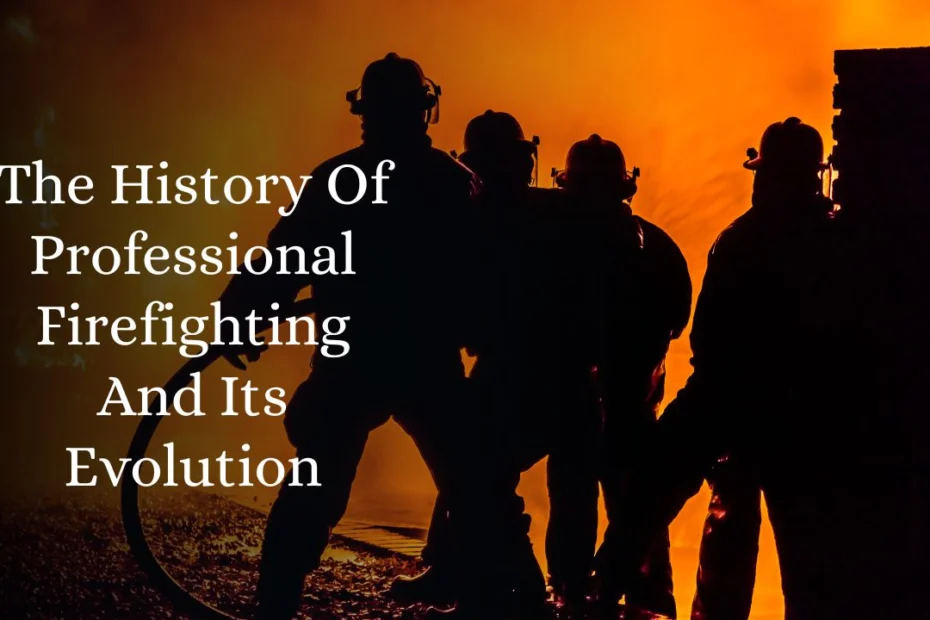
The history of professional firefighting is deeply connected to the growth of cities, industrialization, and the need to protect human life and property from devastating fires.
What began as simple community efforts slowly transformed into one of the most organized and technologically advanced emergency services in the world.
Today’s fire departments are not limited to extinguishing fires—they handle rescues, medical emergencies, hazardous materials, and disaster response.
This article explores the real and factual evolution of firefighting, tracing its journey from ancient civilizations to modern fire services.
Early Beginnings of Firefighting in Ancient Civilizations
The first organized fire response efforts
In ancient societies, fire posed a constant threat due to wooden structures, open flames, and lack of regulation. Early firefighting depended on community participation rather than trained professionals.
Ancient Greek engineers developed manual fire pumps, showing early understanding of pressurized water delivery. These devices laid the groundwork for future firefighting equipment.
Rome’s organized fire brigades
Ancient Rome made a historic breakthrough by forming one of the earliest known organized firefighting forces. The Vigiles, established during the Roman Empire, acted as firefighters, night watchmen, and peacekeepers.
This force introduced the idea of government-supported fire protection, setting a precedent for future public fire services.
Firefighting During the Middle Ages
Community bucket brigades
During the Middle Ages, firefighting remained largely informal. Towns relied on bucket chains, where citizens passed water hand-to-hand from wells or rivers.
Fire hooks were commonly used to pull down burning buildings to prevent fire spread.
The role of town regulations
Many European towns introduced early fire safety laws, such as curfews on open flames and building restrictions. While primitive, these measures marked the beginning of organized fire prevention, not just fire suppression.
The Great Fire of London and the Rise of Insurance Fire Brigades
A turning point in fire protection history
The Great Fire of London in 1666 destroyed thousands of buildings and reshaped how societies viewed fire risk. The disaster revealed the economic impact of uncontrolled fires and triggered major reforms.
Fire insurance and private brigades
Following the fire, insurance companies began forming private fire brigades to protect insured properties. Buildings displayed fire marks to indicate coverage.
While limited in scope, these brigades introduced trained personnel, specialized tools, and faster response times—key elements of professional firefighting.
Birth of Municipal Fire Departments
The move from private to public fire services
As cities expanded, reliance on insurance brigades proved inefficient. Governments recognized the need for publicly funded fire departments serving all citizens equally.
Edinburgh’s professional fire service
In the early 19th century, Edinburgh established one of the first municipal professional fire services. This marked a major milestone, introducing formal training, discipline, and standardized operations that influenced fire departments worldwide.
London and Paris modernize fire protection
London transitioned fully to a public fire brigade in the mid-1800s, while Paris developed a military-style fire brigade emphasizing strict command structure and discipline. These models demonstrated that organized leadership improves emergency response efficiency.
Technological Evolution in Firefighting
Steam fire engines revolutionize firefighting
The invention of steam-powered fire engines in the 19th century transformed firefighting. These engines delivered stronger water streams and reduced reliance on manpower. Firefighters could now combat larger and more intense fires.
Motorized fire apparatus
The early 20th century introduced motorized fire engines, replacing horse-drawn equipment. This innovation significantly reduced response times and allowed departments to cover larger areas efficiently.
Firefighter Safety and Protective Equipment Evolution
Early risks faced by firefighters
For centuries, firefighters worked with minimal protection, often wearing simple clothing and helmets. Smoke inhalation and heat exposure caused countless injuries and deaths.
Introduction of breathing protection
The development of self-contained breathing apparatus (SCBA) marked a life-saving breakthrough. Firefighters could now enter smoke-filled buildings safely, enabling effective interior firefighting and rescue operations.
Standardized protective gear
Modern turnout gear—including fire-resistant coats, pants, gloves, boots, and helmets—was developed to protect against heat, flames, and toxic exposure. Safety standards ensured consistent protection across departments.
Command Systems and Professional Training
The need for structured incident management
As emergencies grew more complex, fire departments required better coordination. This led to the development of Incident Command Systems, which define leadership roles, communication protocols, and accountability during emergencies.
Professional training and certification
Modern firefighters undergo rigorous training in:
- Fire suppression
- Rescue techniques
- Hazardous materials handling
- Emergency medical services
- Fire prevention and inspection
Continuous education ensures firefighters adapt to evolving risks and technologies.
Expansion of Firefighter Responsibilities
Firefighters as all-hazards responders
Today’s professional firefighters handle far more than fires. Their responsibilities include:
- Medical emergencies
- Vehicle extrication
- Natural disasters
- Urban search and rescue
- Public education and prevention programs
In many regions, medical calls account for the majority of fire department responses.
Key Milestones in Professional Firefighting Evolution
| Era | Major Development | Impact |
|---|---|---|
| Ancient times | Manual fire pumps | Early water-delivery technology |
| Roman era | Organized fire brigades | Government-backed fire protection |
| Middle Ages | Bucket brigades | Community-based response |
| 17th century | Insurance fire brigades | Trained private firefighting |
| 19th century | Municipal fire departments | Public fire services |
| 1800s | Steam fire engines | Increased firefighting power |
| Early 1900s | Motorized fire apparatus | Faster response times |
| Mid-1900s | SCBA introduction | Improved firefighter safety |
| Modern era | Incident Command Systems | Efficient emergency management |
Professional firefighting has evolved over centuries from simple community bucket brigades into a highly trained, technology-driven public safety profession.
In ancient civilizations, early fire pumps and organized watch groups laid the foundation for fire response, while medieval towns relied on citizens and basic tools to control blazes.
Major disasters, such as the Great Fire of London, highlighted the need for structured fire protection, leading to the rise of insurance fire brigades and eventually publicly funded municipal fire departments.
The history of professional firefighting reflects humanity’s ongoing effort to control one of nature’s most destructive forces.
From ancient bucket brigades to today’s highly trained, technologically advanced fire services, each stage of evolution brought improved safety, efficiency, and community protection.
Modern firefighting is no longer just about extinguishing flames—it is a comprehensive public safety profession dedicated to saving lives, preventing disasters, and building resilient communities.
FAQs
When did professional firefighting begin?
Professional firefighting began when governments and cities created organized, trained fire brigades, replacing informal community bucket brigades.
Why was the Great Fire of London important to firefighting history?
It exposed the economic and social cost of fires, leading to insurance brigades and eventually public fire departments.
How has firefighter safety improved over time?
Safety improved through protective gear, breathing equipment, standardized training, and modern command systems that reduce risks during emergencies.
How Firefighters Balance Family Life And Emergency Service
The Importance of Fire Prevention Education In Saving Lives
Firefighter Stories That Inspire Courage And Commitment
A Day in the Life of a Professional Firefighter
What It Takes To Build A Long And Successful Firefighting Career