Have you ever played back a voice message and wondered, “Is that truly how I sound?” You’re not alone in this experience. Many people are surprised by their recorded voice when they hear it for the first time, leading to intriguing questions about perception and self-image.
So, what’s really happening here? Why does your voice on a recording sound so alien compared to what you hear in your head? Let’s pull back the curtain on this everyday mystery.
The Shocking Truth About Hearing Your Own Voice
Most people are surprised (and often uncomfortable) when they hear themselves recorded. It’s one of those universal experiences no one warns you about.

- Is it just self-consciousness?
- Is your phone messing with the sound?
- Or is something weirder going on?
The answer, according to audiologists and ear, nose, and throat experts, actually comes down to science—specifically, bone conduction.
How Bone Conduction Shapes What You Hear
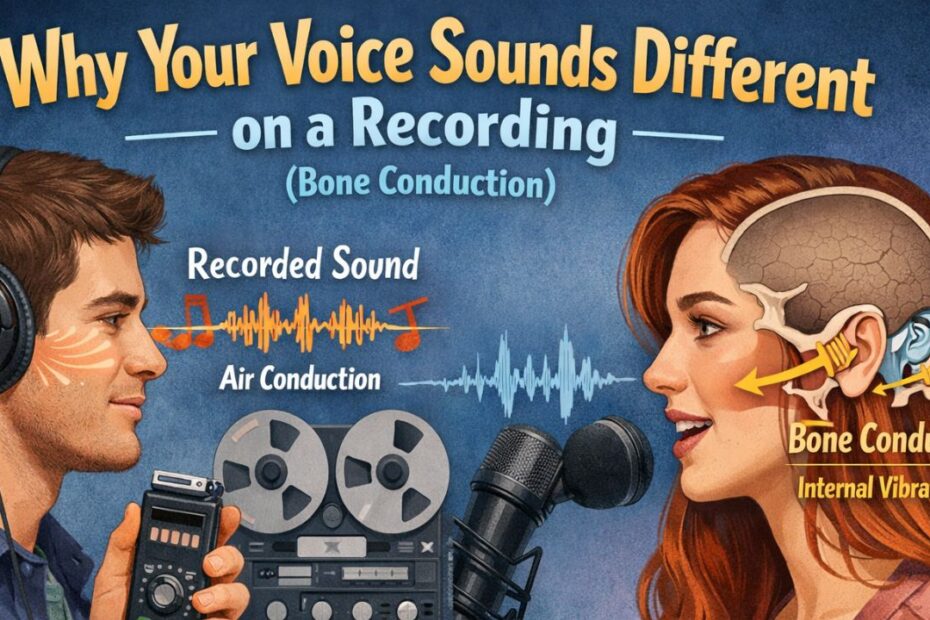
Let’s get a bit technical, but I promise it’ll all make sense soon. When you speak, you hear your voice in two main ways:
- Air conduction: Sound waves travel from your mouth through the air to your ears. This is how everyone else hears your voice.
- Bone conduction: Vibrations from your vocal cords travel directly through the bones in your skull to your inner ear.
This means you’re literally hearing your own voice from the inside out! The combination of air and bone conduction gives your voice a richer, deeper sound inside your own head.
But when you listen to a recording, you’re only hearing the air-conducted version. The bone-conducted richness disappears, so your voice sounds thinner and higher-pitched.

Why Does Your Recorded Voice Sound So Strange?
The difference between what you’re used to (bone + air conduction) and what you hear on tape (just air conduction) is startling. Here’s what’s really going on:
- Missing bass frequencies: Bone conduction emphasizes the lower, bassy parts of your voice. Recordings can’t capture this, so your voice sounds less full.
- More nasal quality: Without bone conduction, the higher frequencies come through more, often making your voice sound nasally or tinny.
- Brain bias: You’ve been hearing yourself via bone conduction your whole life. When confronted with just the air-conducted version, your brain flags it as “not me.”
Experts agree: this disconnect is totally normal. According to the American Academy of Otolaryngology, almost everyone feels their recorded voice is unfamiliar or even embarrassing at first.
Does Technology Make a Difference?
You might wonder if microphones, speakers, or phones are to blame. While audio quality and settings can impact how your voice is captured, the real culprit is still bone conduction.
- High-end microphones can help, but they can’t add the bone conduction effect back in.
- Earphones and speakers color the sound, but usually not enough to account for the whole difference.
So, even if you record in a studio, you’ll still hear a version of your voice that sounds “off” compared to what you’re used to.

Can You Get Used To Your Real Voice?
Good news: most people do! Musicians, podcasters, and public speakers often listen to recordings of themselves and, over time, their brain adjusts.
- You can train yourself to accept this air-conducted version as “normal.”
- It just takes exposure and a little patience.
Remember, the person you hear on tape is the one everyone else hears every day. The difference isn’t a flaw—it’s just physics!
What Does This Mean For You?
Next time you listen to a voice memo or video and cringe at your own voice, remember: it’s not “wrong” or “weird”—it’s just different!
- Your voice isn’t changing. You’re hearing it differently.
- Even professional singers and speakers had to get used to it.
So, what do you think? Has hearing your recorded voice ever surprised you? Understanding bone conduction might make you feel a little less self-conscious—and a lot more curious about the way our bodies work.

VPNs: Do You Really Need One or Is It Just Marketing Hype?

Incognito Mode: Does It Actually Hide Your Browsing from Your ISP?

Subscription Fatigue: How to Find and Cancel Subs You Forgot About

5G Conspiracy: Why The Towers Are Harmless (Physics Explained)
Wireless Charging: Is It Less Efficient Than Plugging In?