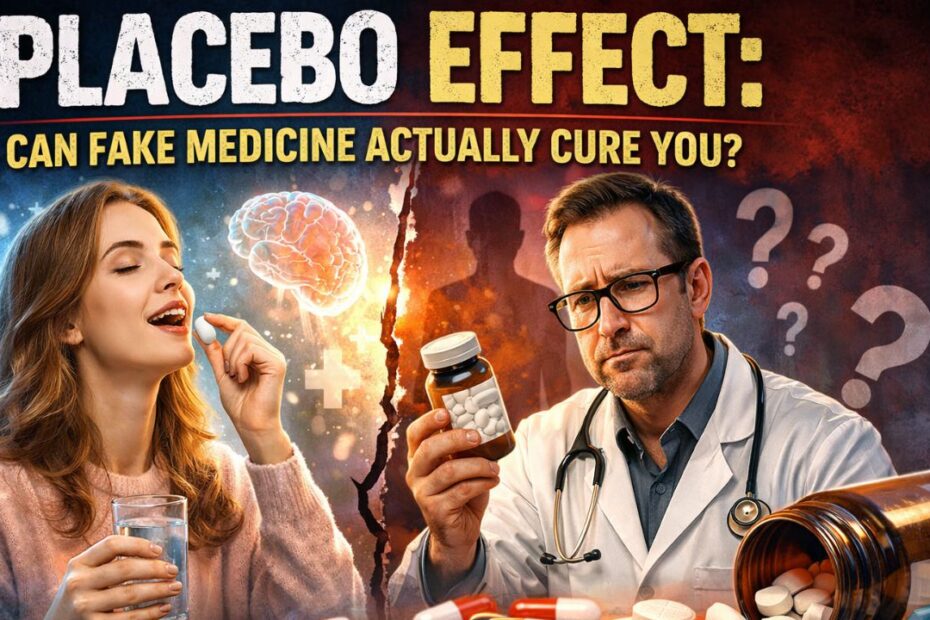
Have you ever wondered if your mind could actually influence your body’s healing process? What if the sugar pills used in clinical trials hold more power than just trickery? While the idea of placebo treatments easing real symptoms might sound unbelievable, the science behind it uncovers some truly remarkable revelations.
What Is The Placebo Effect?
The placebo effect is when a patient feels better after taking a treatment that shouldn’t actually work. Maybe it’s a sugar pill, a saline injection, or even a sham procedure. But here’s the twist: people often report real improvements.
- Placebos are “fake” treatments used in clinical trials.
- Patients aren’t told if they get the real drug or the placebo.
- Their symptoms sometimes improve anyway.
So, what’s really happening? Is it all in your head—or is there more to it?

How Does the Placebo Effect Work?
Scientists say it’s not just wishful thinking. Your brain is a powerful chemist. When you believe you’re getting treated, your body can release natural chemicals—like endorphins or dopamine—that actually change how you feel.
- Expectation triggers brain activity in pain and reward centers.
- Your body can naturally reduce pain, anxiety, or even inflammation.
- For some conditions, the effects are measurable—like lower blood pressure or improved mood.
In fact, major medical journals like The New England Journal of Medicine and The Lancet have published hundreds of studies on this phenomenon.
What’s the Catch?
Okay, so does this mean fake medicine can cure anything? Not exactly. The consensus among doctors is clear: placebos can improve symptoms, especially for things like pain, mood, or fatigue. But they can’t shrink a tumor or cure infections. Serious diseases need real treatment.
- Placebos might work for headaches, indigestion, or anxiety.
- They can’t fix broken bones or kill bacteria.
- Placebos work best for symptoms you can feel, not conditions that need physical repair.
The effect is real but has its limits. Even the strongest placebo won’t replace antibiotics or chemotherapy.
Why Do Doctors Use Placebos?
Placebos are most commonly used in clinical trials. Researchers compare new drugs to a placebo to find out what actually works. If people improve more on the real drug, it’s proof the medicine is effective. If not, the effect might just be all in our minds.
- This helps weed out fake cures and snake oil.
- It’s a gold standard for medical research worldwide.
In rare cases, some doctors have used placebos in practice, but that’s controversial and raises ethical questions. Transparency is key: most experts agree patients should know what they’re getting.
Famous Placebo Stories
Studies have shown people can feel less pain after placebo surgery for knee pain. Others have reported migraine relief after taking pills with no active ingredients at all. The effect is so powerful, some scientists say every treatment—even real ones—has a bit of placebo magic mixed in.
- Placebo acupuncture eased chronic pain in some trials.
- Open-label placebos (where patients know it’s fake!) still help some people.
Isn’t it wild how your belief can turn a dud into a dynamo?
Can You Harness the Placebo Effect?
Here’s a thought: if belief is so powerful, can you use it for self-healing? Many experts say yes—at least, to a point. Mindfulness, positive thinking, and trust in your care can all boost your body’s ability to heal.
- Supportive doctor-patient relationships can boost outcomes.
- Even being told “this will help you” can make a difference.
- But always use real medicine for serious conditions.
Bottom line: your brain is a secret weapon in healing. But don’t ditch science for wishful thinking!
Should You Trust the Placebo Effect?
Here’s what I’ve learned—and what most doctors agree on: the placebo effect is real, but it’s not a miracle cure. It can help with symptoms, but not diseases. If you ever feel better just because you think you should, you’re not alone. Your brain is amazing!
So, next time you pop a pill, ask yourself: is it the medicine—or your mind—doing the healing?

VPNs: Do You Really Need One or Is It Just Marketing Hype?
Incognito Mode: Does It Actually Hide Your Browsing from Your ISP?
Subscription Fatigue: How to Find and Cancel Subs You Forgot About

5G Conspiracy: Why The Towers Are Harmless (Physics Explained)
Wireless Charging: Is It Less Efficient Than Plugging In?