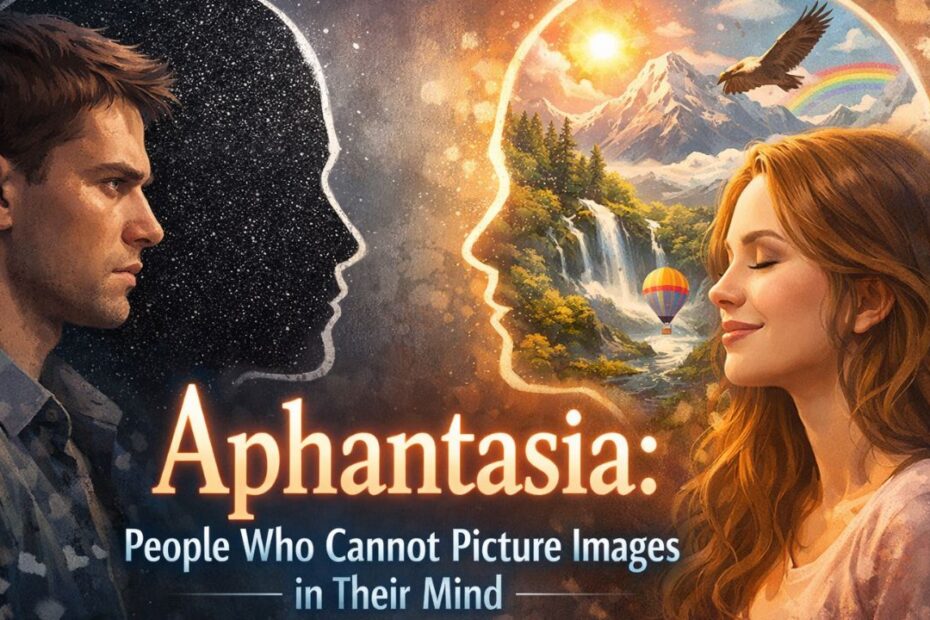
Have you ever tried to picture a beach, only to be met with an unsettling void? What if I told you that some people experience this lack of mental imagery regularly? If you’re intrigued by how this phenomenon works—or whether it genuinely exists—you’re not alone in your curiosity.
What Exactly Is Aphantasia?
Aphantasia is the inability to visualize images in your mind. That means when most people close their eyes and try to picture a familiar face, a sunset, or even an apple, they “see” something. But for people with aphantasia, it’s just blank.
- Coined in 2015 by neuroscientist Adam Zeman
- Affects roughly 1-3% of people, according to recent estimates
- It’s not a disease—just a unique way some brains work
How Do You Know If You Have Aphantasia?
Let’s do a quick test. Imagine a red star. Do you see it in your mind? Or can you just describe it, but not “see” it? Most people can picture it, but if you can’t, you might have aphantasia. Fun fact: Many people only discover this trait as adults—sometimes through viral social media posts!

- Try imagining a loved one’s face—can you see their features?
- Recall a favorite vacation—does it play out visually or just as facts?
Curious about your results? Even many experts only realized their own aphantasia after learning it’s possible to visualize at all!
What Does Life Without Mental Imagery Feel Like?
If you have aphantasia, you probably don’t miss what you’ve never had. But when you hear people talk about “seeing” memories, it might sound like a superpower! So how do aphantasics remember things?
- They recall facts, sounds, or emotions—just not visuals
- Many excel in logical or verbal tasks
- Some report difficulties with autobiographical memory
Interestingly, aphantasia doesn’t stop creativity. Many artists, writers, and composers have aphantasia. Blake Ross, co-creator of Firefox, shared his surprise on discovering this difference—and he’s not alone.
Why Does Aphantasia Happen?
Scientists are still figuring this one out. The general consensus is that aphantasia isn’t caused by injury or trauma, but is simply an innate difference in how our brains are wired. Some studies using MRI scans show reduced activity in the brain’s visual cortex during imagination tasks for people with aphantasia.

- Possibly a genetic component
- May run in families
- Not linked to lower intelligence or ability
Is Aphantasia A Disability?
This is a common question. I get why you’d ask—doesn’t it sound limiting? But most people with aphantasia don’t describe it as a disability. Instead, they see it as a different lens through which to experience the world.
- Some find certain memory tasks harder
- Others adapt by using lists or verbal cues
- No evidence that it limits career or life potential
In fact, aphantasics often discover workarounds—like focusing on words, not images, for recall.
Can You Train Yourself to See Images?
Here’s where things get interesting. While some claim that visualization exercises can help, there’s no solid scientific consensus that aphantasia can be “cured.” Some people report minor improvements, but for most, it’s simply a brain quirk to embrace.
Experts suggest focusing on your strengths instead. After all, many aphantasics excel in analytical fields, or rely on strong verbal memory.

What If You Suspect You Have Aphantasia?
If you think you might have aphantasia, you’re in good company. Some people find it validating to connect with others, while others shrug and move on. There’s no treatment needed—just understanding.
- Take online self-assessment tools, like the Vividness of Visual Imagery Questionnaire (VVIQ)
- Talk to a psychologist or neuroscientist for more info
- Join online communities to hear others’ experiences
Bottom line? Whether your mind’s eye is a vivid movie screen or a blank slate, you’re not broken—just unique. And who knows? That difference might just be your secret superpower.

VPNs: Do You Really Need One or Is It Just Marketing Hype?

Incognito Mode: Does It Actually Hide Your Browsing from Your ISP?

Subscription Fatigue: How to Find and Cancel Subs You Forgot About

5G Conspiracy: Why The Towers Are Harmless (Physics Explained)
Wireless Charging: Is It Less Efficient Than Plugging In?